Risks of Selling Through Marketplaces: Legal and Tax Aspects
Law No. 15111-d eliminates the asymmetry between real online turnover and what the State Tax Service (DPS) sees. We break down the timeline of changes, the Payoneer/Wise trap at 13 p.p., the risks for individual entrepreneurs (FOPs), and the roadmap for preparing for 2027.

Risks of Selling Through Marketplaces: Legal and Tax Aspects
For the last ten years, marketplaces have been a zone of relative calm for Ukrainian sellers. The tax authority saw funds moving into bank accounts but didn't see the actual trade: how many items were sold, for what amount, through which platforms, or whether it was a one-time sale of personal belongings or a full-fledged business. This asymmetry gave rise to an entire layer of "gray-area" online retail—not always with malicious intent, often simply because the line between "I sold my old couch" and "I'm running a business" was blurry, and the state had no physical way to check.
On June 9, 2026, the Verkhovna Rada passed law №15111-d, which eliminates this asymmetry. And the main risk of selling through marketplaces in 2026–2027 isn't the tax rate. It's that most sellers are still thinking in terms of the old era, when being unnoticeable was a viable strategy. That strategy is scheduled to stop working, and the timeline is already written into the law.
Part I. What Exactly Has Changed: The Architecture, Not the Rate
The Platform Becomes a Tax Agent
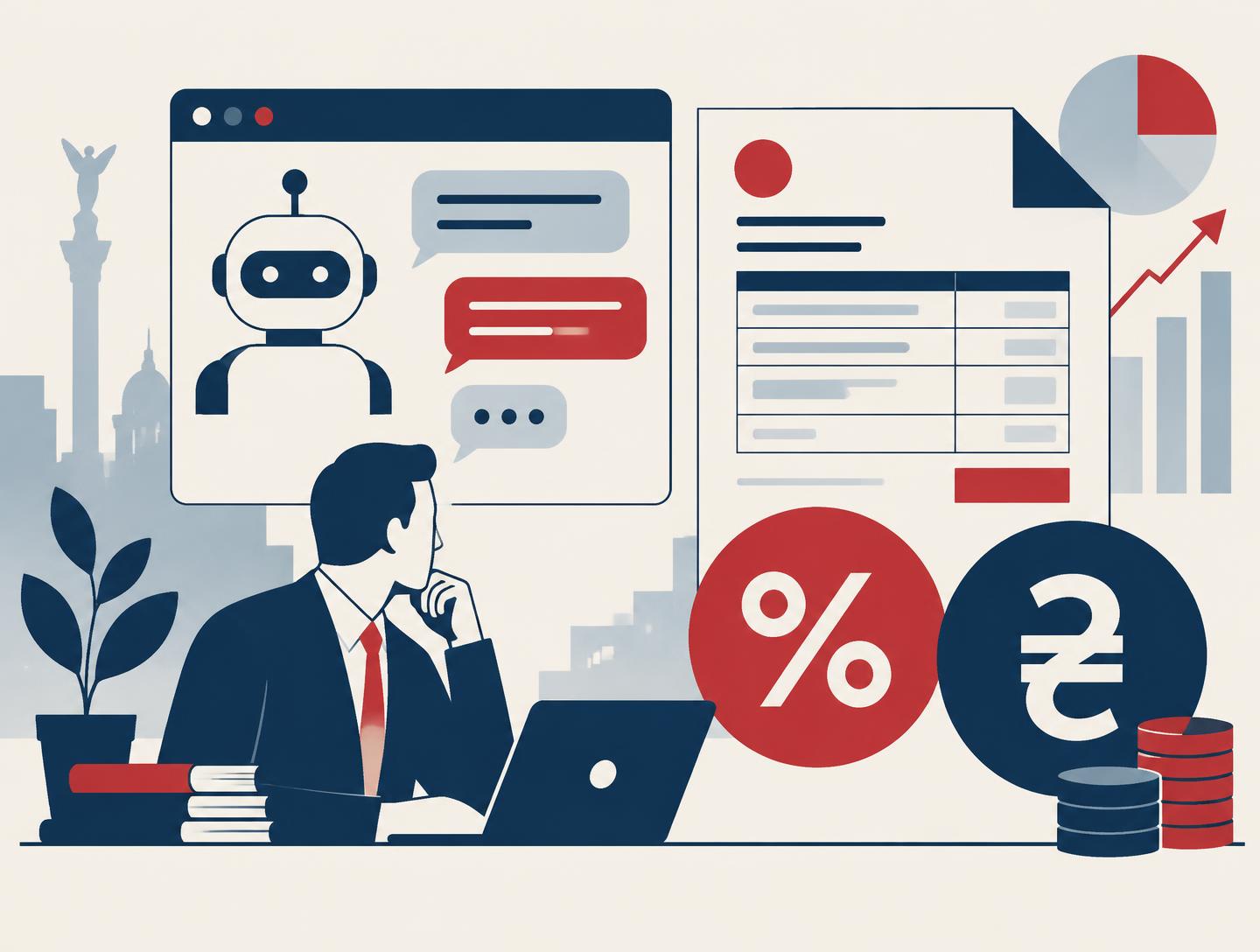
The key provision of the new law is that the responsibility to calculate and withhold tax is shifted from the seller to the platform operator. Marketplaces, delivery services, rental services—they all acquire the status of a tax agent: they identify sellers, collect data on their income, withhold tax, and report to the State Tax Service (STS).
“The key provision of the new law is that the responsibility to calculate and withhold tax is shifted from the seller to the platform operator.”
This is an implementation of the European DAC7 directive and the OECD Model Rules for Reporting by Digital Platform Operators. In other words, this isn't a Ukrainian improvisation but a standard that EU countries have been operating under for several years, and which Ukraine is adopting as part of its commitments to the IMF and the EU.
Understand the mechanics correctly: the state is no longer trying to find the seller. The state goes to the platform—and gets a full list of sellers with their income amounts. This is a fundamentally different model of control, and it is what defines all the risks described below.
The Timeline: When Things Turn On
The law is being rolled out in stages, and it's critical for business owners to understand this timeline, as it defines the window for preparation.
From November 1, 2026 — platform operators are required to register with the STS (they must register by the end of 2026). This is a preparatory stage: the state is building a register of the platforms it will be working with.
From January 1, 2027 — special rules for taxing the income of individuals received through platforms, and the corresponding reporting, come into effect.
In 2028 — the first international automatic exchange of information will take place, covering the 2027 reporting year. The exchange provisions will apply after Ukraine joins the DPI Multilateral Agreement, which already has dozens of member countries, including most EU states.
An important detail: information on income received through platforms in 2026 will not be submitted to the STS—neither by operators nor by foreign countries. This means 2026 is the last "non-transparent" year. This is your window to prepare, and it's closing.
Special Regime for Individuals
For individual sellers, the law introduces a separate, rather lenient regime—and it's important to understand this without the panic being fanned by headlines like "the OLX tax."
- Non-taxable threshold: Income up to €2,000 per year from selling goods through platforms is not taxed, and the number of sales is not limited. One-off sales of personal or used items within this amount do not create a tax liability.
- Preferential rate: Income within the limit is taxed at a preferential rate of around 10%. The tax is withheld and remitted by the platform itself—the seller does not need to file a tax return.
- Upper limit of the regime: Up to 834 minimum wages per year (about 7.2 million UAH as of 2026). Income above this limit is taxed at the standard rate of 23%.
- What's simplified: No need to open special accounts; provisions for disclosing sellers' banking secrecy did not make it into the final version; the risk of reclassifying the "platform-seller" relationship as employment has been removed.
- Who is not eligible for the preferential rate: Sellers of excise goods, among others.
But the preferential treatment isn't automatic. It's conditional. To apply the preferential rate, a seller must simultaneously meet several requirements, including: being a resident of Ukraine, using a Ukrainian bank account, having no hired employees, and not trading in excise goods. If even one condition is not met, the preferential rate does not apply, and the income is taxed at the standard rate of 23%.
At first glance, this looks like a relief—and for a small-time seller of personal items, it is. But for those working with foreign platforms, this "Ukrainian account condition" turns the preferential treatment into a trap. Let's break it down, because this is the most underestimated risk in the entire law.
Part II. Trap #1: The Ukrainian Account Condition and Why It Will Kill Freelancers on Payoneer
This is the part that news roundups rarely cover—and it could cost specific people 13 percentage points of their income.
The Heart of the Problem
The condition sounds harmless: to get the preferential rate, you must use an account opened in a Ukrainian bank (or a payment system authorized in Ukraine). The legislator's logic is understandable: the state wants to see the money within a controlled perimeter.
The problem is that Ukrainian freelancers and e-commerce sellers widely receive income from foreign platforms to non-Ukrainian accounts. The standard scheme looks like this: Upwork, Fiverr, Etsy, Amazon, Shopify → Payoneer (or Wise) → and only then withdrawn to a Ukrainian card. The money from the platform does not arrive at a Ukrainian bank, but at an account in an international payment system.
And here's the key: Payoneer and Wise are not Ukrainian accounts. Payoneer is an American payment system that provides users with virtual accounts (essentially electronic wallets); Wise is a British fintech platform. Neither of these services is registered as a payment system with the NBU. The tax authorities' position is also well-known: Payoneer is an international payment system, and Wise is a money transfer system, and they are not considered accounts opened in banking institutions.
Put it all together, and you see the trap's mechanism:
The platform (tax agent) sees that the payout is not going to a Ukrainian bank account. The condition for the preferential rate is not met. Therefore, the platform is obligated to withhold tax at the standard rate of 23%—from the entire payout amount.
Why This is Serious: Four Reasons
1. This isn't a fine or a penalty for a violation—it's the automatic default mode. The seller hasn't done anything wrong: they work honestly, receiving money through a legal channel used by millions of people worldwide. But a formal condition isn't met—and the higher rate is applied automatically, by the platform itself, without any decision from the tax service, without dispute, without any opportunity to explain. The money simply won't arrive.
2. The condition is technically impossible to meet without breaking the entire payment chain. Formally, one could say, "just enter your Ukrainian IBAN in the platform's settings." But in practice, many foreign platforms do not physically support direct payouts to Ukrainian bank accounts—which is precisely why Payoneer became the de facto standard for the Ukrainian freelance market. Payouts in foreign currency to a Ukrainian account entail currency controls, requirements for supporting documents, and banking restrictions that an individual who is not a registered entrepreneur is often unprepared for. And changing the payment route isn't just "checking a box": on some platforms, changing the linked payment method is difficult or involves downtime. So, a requirement formulated in an office clashes with the infrastructural reality of the market—and is widely unfeasible not due to sellers' negligence, but because of how international payments are structured.
3. The cost is 13 percentage points, and it's calculated on gross revenue. The difference between the preferential regime (around 10%) and the standard one (23%) is more than double the tax rate. For a freelancer with an income of, say, $2,000 a month, this is a difference of hundreds of dollars every month. For an e-commerce seller with a thin margin, 23% of gross revenue (not profit) is often more than their entire margin. Such a business ceases to be profitable not in theory, but arithmetically.
4. The most vulnerable are the very people the law was supposed to protect. The special regime with a preferential rate was sold to the public as a simplification for the "little guy": sell and don't worry about tax returns, the platform will do it all for you. But in practice, the ones at greatest risk are non-systemic players—freelancers, designers, developers, handmade sellers on Etsy—that is, those who don't have an accountant, don't read the Tax Code, and will find out about the higher rate after the fact, when the platform has already withheld the money.
What This Means for Sole Proprietors (FOPs)
There's an important nuance that saves part of the business community. The special regime with its preferential rate and conditions is primarily designed for individuals, not for Sole Proprietors (FOPs), which is the Ukrainian equivalent of a sole proprietorship. Platform operators will collect information about sellers, in part, to confirm the grounds not to tax the income—for example, if the seller is a registered sole proprietor. The logic is that a Sole Proprietor (FOP) pays taxes independently under their own system, so the platform does not withhold tax from them.
The practical conclusion from this is perhaps the most important one in this entire article:
The status of a Sole Proprietor (FOP) with correctly filed documents transforms from "desirable" to a protective mechanism. Not because the FOP rate is better, but because it removes you from the platform's automatic 23% withholding.
But there's a condition here too: the platform must know and confirm your status. This means the data in your platform account (tax number, status, jurisdiction) must be correct and up-to-date. A seller who has been working on Upwork for years as an "individual" while having an FOP at home risks being subject to withholding simply because the platform has no reason to consider them an entrepreneur.
What to Do Right Now
- Inventory your payment routes. Write down: which platform → pays where → to which account. Anything going through Payoneer/Wise is in the risk zone.
- Check if your platform supports payouts to a Ukrainian account at all. If so, assess whether it's realistic to switch and what that would change in terms of currency controls.
- If you are a freelancer or seller without an FOP with foreign income, run the numbers on becoming an FOP. It's often not "extra hassle" but a way to avoid losing 13% of your income.
- Update your tax status in your profile on each platform. This gives the operator grounds not to apply withholding.
- Don't wait until 2027. Restructuring payment routes and registering an FOP takes time; in December 2026, everyone will be doing it at once.
Part III. The End of the Invisibility Era
The state didn't so much raise taxes as it solved its main problem—the visibility problem. Before 2027, the tax service could see deposits into an account but had no structured data on the trade itself. After 2027, it will receive this data directly from the platforms, in a machine-readable format, with seller identification. And from 2028, it will also get data from foreign platforms through international exchange.
This changes the nature of risk. Previously, a seller's risk was probabilistic: "what if they check." Now, it becomes deterministic: a discrepancy between your actual turnover and your declared income will be discovered automatically because both figures will be in the same system.
From this comes a strategic conclusion: any business model whose economics relied on incomplete declaration of online turnover becomes unviable from 2027. Not "risky"—specifically unviable, because its vulnerability ceases to be a matter of chance. If your margin only exists on the condition that part of your sales are not visible, you don't have a margin—you have a deferred fine.
Part IV. A Seller's Tax Risks: Where Things Most Often Break
1. Income Is Total Revenue, Not the "Post-Commission" Amount
The marketplace withholds a commission, and the seller sees the "net" amount in their account. But for tax purposes, income is generally the full price paid by the customer. You recognize the platform's commission separately—and only if you have supporting documents. Why this is critical now: the platform will report the seller's gross income. If you've been declaring your "net" proceeds, your tax return will automatically diverge from the platform's data, and this discrepancy won't require an audit—it will be visible in the system.
2. Simplified System Limits Are Eaten Up Unnoticeably
Active sales quickly push an FOP toward their group's income limit. Two typical traps: the limit is calculated on gross revenue, not what arrives after commissions, platform discounts, and returns (a seller who focuses on their deposits systematically underestimates their position relative to the limit); and exceeding the limit pushes you onto the standard tax system with back taxes, the discovery of which is now automatic.
3. Goods Without Purchase Documents
The "buy without documents, sell officially" scheme creates a tax loophole: the sale is legal and visible, but there's nothing to confirm the cost of goods sold. In a transparent system where the sale is visible but the purchase is not, such a structure looks highly suspicious to a regulatory body.
4. International Platforms: The Illusion of "Another Jurisdiction"
Sellers on Etsy, Amazon, eBay, and Shopify often believe that a foreign platform is outside Ukraine's purview. From 2028, after acceding to the DPI Multilateral Agreement, data on the income of Ukrainian residents will flow from foreign platforms via automatic exchange. Plus, currency rules and the risk of undeclared transactions remain. Separately: the classification of income depends on the platform's business model (agent, commission agent, buyer)—this requires an individual tax consultation, as there is no one-size-fits-all answer.
5. "But I'm Just an Individual, Selling a Little"
The law has shielded the sale of used personal items up to €2,000 per year. But systematic trade of purchased goods is business activity, regardless of whether you are registered or not. The preferential regime for individuals is not a way to legally run a retail business without an FOP: it is designed for non-business sales.
Part V. Legal Risks
The platform's terms of service are not written in your favor. The marketplace sets the terms of cooperation: the right to block an account, withhold payments, deduct fines for complaints, and change the rules unilaterally. You agree to these terms by the act of registering. The new law adds another layer: it provides for the possibility of blocking platforms that refuse to cooperate with the tax authorities—meaning a risk emerges that the seller has no control over whatsoever.
Frozen funds are a cash flow gap risk, not an "inconvenience." If all your turnover goes through a single account on one platform and you don't maintain a financial reserve, any payment freeze stops the business: goods have been purchased, obligations exist, but there's no money.
Responsibility to the consumer remains with you. The marketplace is a storefront, not the seller. Warranties, returns, product description accuracy, and consumer rights are your zone of responsibility.
Intellectual property. Selling a product with someone else's brand, using others' images or descriptions, is a fast track to delisted products and claims from the rights holder.
Part VI. Second-Order Effects: How the Market Itself Will Change
Tax arbitrage disappears as a competitive advantage. Until recently, a seller who didn't declare part of their turnover had a real price advantage—they could undercut competitors by not paying taxes. When everyone's income becomes visible simultaneously, this advantage evaporates. The market levels out—and those whose advantage is built on real economics win: purchase price, logistics, brand, service, and customer retention.
The value of a "clean" history grows. A seller with transparent accounting, confirmed costs, and the correct business structure gains access to credit, partnerships, large contracts, and, ultimately, the ability to sell their business. A "gray-area" seller has no such option—their business is impossible to value or transfer.
Dependence on a single storefront becomes the main strategic risk. A marketplace provides customers, but it doesn't give you ownership of the customer: you don't have their contact information, purchase history, or the ability to bring them back without paying a commission. Add to this the risk of an account ban, changes to the platform's rules, and the potential blocking of the platform itself—and it becomes obvious that the "all my business is on one marketplace" model is structurally vulnerable. A strong model uses the platform as an acquisition channel while simultaneously building its own customer base and alternative sales points.
Preparation Roadmap
By the end of 2026 (the window of opportunity):
- Recalculate your real turnover based on gross revenue—the full price paid by customers before any commissions are withheld. This is your true number.
- Check it against your FOP group's limit on a cumulative basis. If your buffer is less than 20-30%, plan to change your group or business form now.
- Organize your purchase documents: every batch of goods must have a confirmed origin and cost.
- Choose the correct business form for your planned turnover next year—taking into account that from 2027, nothing can be hidden.
- Conduct an audit of the platforms you sell on, including foreign ones—from 2028, data from them will arrive automatically.
Continuously: Read the terms of service for each platform; build a financial reserve in case of payment freezes; diversify your channels and start collecting your own customer base; check your rights to brands and images; write out return and warranty conditions for your buyers.
Conclusion
Law №15111-d is rarely read correctly. It's discussed as a "new tax on OLX"—and people argue about the rate. But the rate here is secondary: for most small sellers, the regime is even being softened, with a €2,000 tax-free threshold and a preferential rate.
The real meaning of the law lies elsewhere: it makes online retail visible. From 2027, domestic platforms will report, and from 2028, foreign platforms will report too. A market that has lived in a zone of partial visibility for a decade is moving into a zone of full visibility.
For a conscientious seller, this is mostly good news: the competitor who won on price by not paying taxes is disappearing. But there's another side. The preferential regime, presented as a simplification, is conditional on requirements that part of the market physically cannot meet. Thousands of Ukrainian freelancers and sellers who receive income from foreign platforms via Payoneer or Wise risk falling not under the preferential ~10%, but under the standard 23%, withheld automatically by the platform itself—not for a violation, but simply because their payment route didn't fit the condition. This isn't the "gray" segment. This is the most hardworking, export-oriented part of the economy that brings foreign currency into the country.
So, for some, this law is a market leveler. For others, it's a hidden trap costing 13 percentage points of income. The difference between these two scenarios will be determined by whether a business owner understands the details before January 1, 2027.
And most importantly: 2026 is the last year for which data will not reach the STS from platforms. This is not a reason to take one more risk. It's a window to restructure while restructuring is still cheap.
Selling through marketplaces or planning to start? The experts at KTSPRB will analyze your model under the new rules: they'll choose a safe business form and tax group, check your gross income accounting, analyze agreements with platforms, and prepare you for 2027 while there's still time. [Book a meeting with an expert →]
This material is analytical in nature and does not constitute individual tax advice. Law №15111-d was passed by the Verkhovna Rada on 09.06.2026; certain provisions come into force in stages (from 01.11.2026 and 01.01.2027), and the international exchange norms—after Ukraine's accession to the DPI Multilateral Agreement. Current rates, limits, and deadlines should be verified against the final text of the law and clarifications from the STS.