What the Ukrainian tax authority sees in 2026: a full map of STS data sources
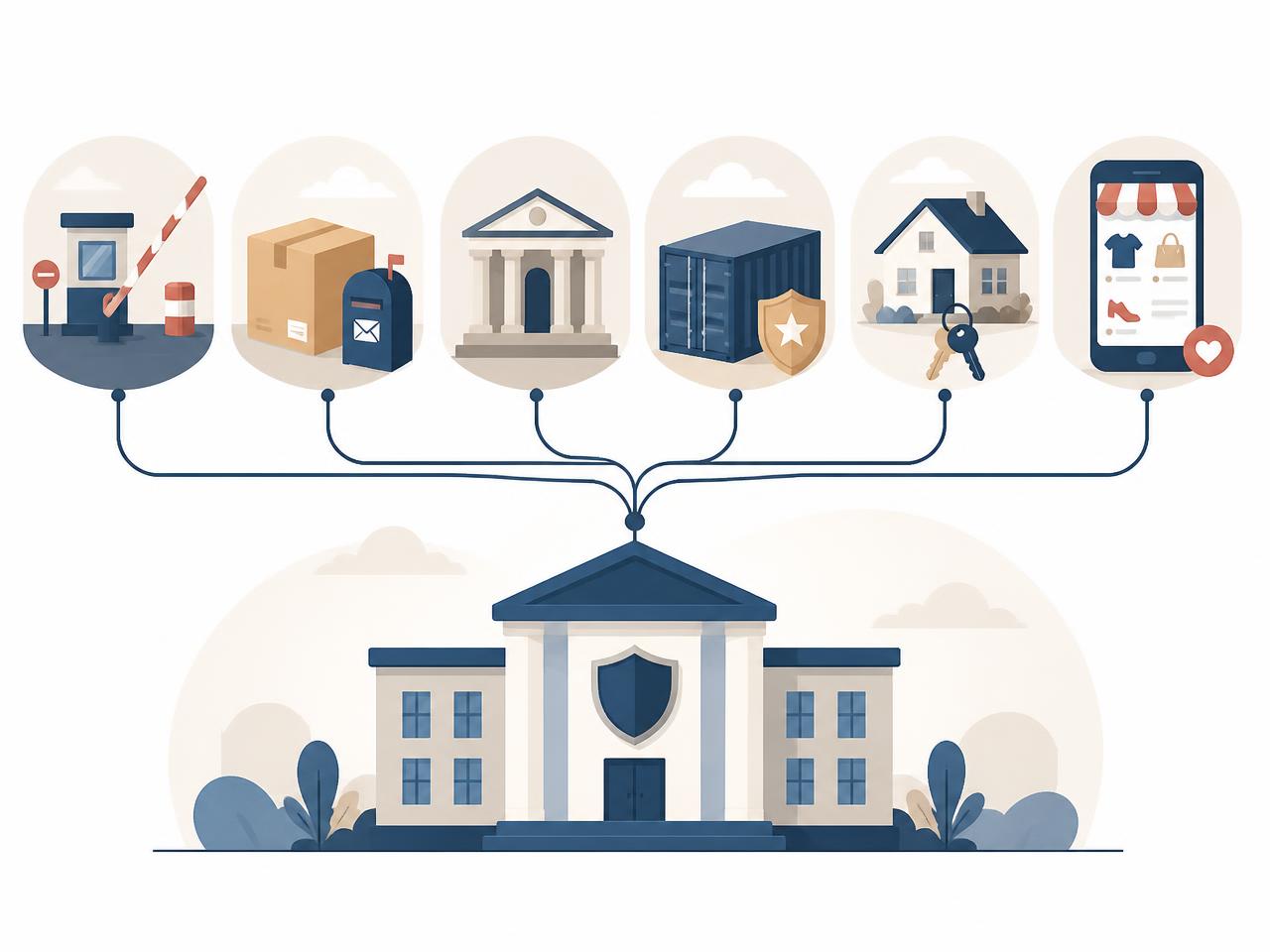
Border, the Oberih registry, post and cash-on-delivery, banks, CRS 2.0, customs, notaries and marketplaces: a consolidated table of the data sources the State Tax Service uses in 2026.

"What does the tax authority actually see?" is one of the most common questions among entrepreneurs, sole traders and ordinary citizens. Myths abound: from "the tax service sees every card and every purchase" to "if you sell by post, nobody will ever find out." The truth is somewhere in between.
In 2026 the state is indeed actively building data exchange between registries and agencies: the border service, military enlistment offices, postal operators, banks, customs, notaries — and soon marketplaces. But this is not blanket real-time monitoring. It is a set of specific channels, each with its own limits, triggers and legal basis.
The table below shows where the State Tax Service (STS) gets its information, how the exchange works, and which nuances are worth knowing before you panic — or relax. This piece complements our analyses of the line between lawful tax saving and evasion and financial monitoring of personal cards.
“The table below shows where the State Tax Service (STS) gets its information, how the exchange works, and which nuances are worth knowing before you panic — or relax.”
Table: data sources used by the tax authority
| Data source | What the STS sees | How it is obtained (mechanism) | Nuances and limits | Note |
|---|---|---|---|---|
| Border (State Border Guard Service) | Border crossings by a specific person, exit and entry dates | Automated electronic exchange between the STS and the Border Guard Service (live since August 2026; the agreement and protocol were signed on 3 August) | It does not show what the person did abroad, only the fact of being there; used together with other data: determining tax residency, checking whether a director signed documents while physically outside Ukraine | Travelling abroad is not an offence in itself; questions arise only when the data conflicts with other sources (for example, a cash register is operating although no employees are formally hired) |
| Enlistment offices and the "Oberih" registry | The STS transfers to "Oberih" data from the State Register of Individual Taxpayers on men aged 18–60 (employment, sole-trader status, etc.) | Exchange under Cabinet of Ministers Resolution No. 981 of 29.07.2026, covering a defined list of data, within 90 days | This is a one-way "STS → Oberih" exchange, not "the enlistment office handed everything about you to the tax service" — the STS does not receive a person's full military file | Closing a sole proprietorship does not by itself "hide" anyone from the enlistment office or the tax authority |
| Post and cash-on-delivery (Ukrposhta, NovaPay and others) | Recipient data for cash-on-delivery: tax number, full name, card details; NovaPay has been transferring data to the tax authority since 1 March 2025 | Stricter requirements for receipts and accompanying documents from 1 August; the data is recorded and passed to the STS | A cash register is not mandatory when shipping via Ukrposhta, but the income received must still be declared; the risk arises from systematic activity (dozens or hundreds of shipments), not from a one-off sale | Sellers accepting payment without a cash register face penalties for settlement-operation violations; without sole-trader registration — enquiries about the origin of income |
| Banks — domestic operations | The fact that accounts are opened and closed | Bank notifications to the STS in cases prescribed by law | Bank secrecy remains intact; the tax authority has no online access to card spending — obtaining detailed information requires the statutory procedure | The most widespread myth about the tax service is refuted right here |
| Banks and crypto assets — international exchange | Accounts and financial assets of Ukrainian tax residents abroad, including e-money and crypto assets | Automatic exchange of financial information under the CRS standard; the updated CRS 2.0 format applies from 1 July 2026 | Triggered if Ukrainian passport details or address were given when opening the foreign account; depends on whether the country participates in the exchange | Full anonymity of foreign accounts and crypto assets is no longer guaranteed |
| Customs | Customs declarations, import and export data, quantities and values of goods, cross-border movement | Accumulation and cross-checking of customs data against tax and accounting records | Not "every foreign purchase in real time"; questions arise when declared and actual records diverge, or when income does not match import volumes | Most sensitive for businesses with regular foreign-trade activity |
| Real estate (via notaries) | Details of the parties, type of transaction (sale, exchange, gift), the property (address, area, type), transaction value | New Tax Code rule from 1 January 2026: notaries transfer data to the STS quarterly; registrars — within 15 days after the quarter ends | Applies automatically, with no separate application from the citizen; on this basis the tax authority recalculates property tax | A mechanism rarely mentioned alongside the "classic" channels (border, banks, customs) |
| Digital platforms and marketplaces (OLX, Prom, Rozetka, Bolt, Uber, Airbnb, Upwork, etc.) | Platform users' income, identification data of sellers and contractors | Law No. 15111-d (implementation of the EU DAC7 directive): platforms are to become tax agents and transfer data to the STS | As of mid-August 2026 the law was passed by parliament (9 June) but has not yet been signed by the President. No provision is in force, and the indicative deadlines (operator registration from 1 November 2026, the special income tax regime from 1 January 2027) are tied to the date of official publication, which has not happened | This is an expected, not an operating mechanism. It should not be confused with channels that already work |
What this means in practice
The key conclusion is simple: the tax authority has no "magic button" that instantly reveals everything about a person — where they have been, how much they have spent and how much money sits in their accounts. Instead there is a set of separate data sources that are increasingly cross-checked against each other. It is the cross-checking, not any single channel, that creates the risk: when border crossings do not match cash-register activity, when systematic postal shipments are not backed by sole-trader registration, when the customs value of goods does not tally with declared income, or when a property sale automatically travels from the notary to the tax service.
Some channels already work at full capacity (border, post, CRS, real estate), some are only being rolled out (the exchange with "Oberih"), and some have not even entered into force (the law on taxing income from digital platforms). It is worth distinguishing what genuinely affects audits and STS enquiries today from what is merely being prepared for the coming months or years.
For groups of companies, data cross-checking has one more dimension — business structure. See Business splitting after 2028, Part I and Part II: cross-border operations.
Frequently asked questions
Does the tax authority see my card spending?
No. Bank secrecy remains intact: the STS is notified about accounts being opened and closed, but has no online access to card transactions. Detailed information requires the statutory procedure.
Can I sell by post without registering as a sole trader?
Income must be declared regardless of the shipping method. A cash register is not mandatory when shipping via Ukrposhta, but systematic sales (dozens or hundreds of shipments) without sole-trader registration create a risk of enquiries about the origin of income and penalties for settlement-operation violations.
Is income from OLX, Rozetka and other platforms already taxed under the new rules?
No. Law No. 15111-d (DAC7 implementation) was passed by parliament on 9 June 2026, but as of mid-August the President had not signed it. No provision is in force; the indicative deadlines are tied to the date of official publication.
What does the data exchange with the "Oberih" registry provide?
It is a one-way exchange: the STS transfers data on men aged 18–60 (employment, sole-trader status) to "Oberih". The tax authority does not receive a person's military file. Closing a sole proprietorship does not by itself hide anyone from either the enlistment office or the tax service.
Will the tax authority see my foreign account or crypto assets?
Yes, if the country participates in the automatic CRS exchange (the CRS 2.0 format applies from 1 July 2026) and Ukrainian passport details or address were provided when the account was opened. Full anonymity of foreign accounts and crypto assets is no longer guaranteed.
Based on materials from 7eminar.ua and open sources (State Tax Service of Ukraine, Cabinet of Ministers of Ukraine, PwC Ukraine).
Read also: Registering an NGO online in Ukraine: how it works from 2026.
Read also: Reservation from mobilization for remote employees in 2026.
See also: Business splitting among sole proprietors: one Wi-Fi point.
Read also: Tax limitation period of 1,095 days: what the tax authority can audit in 2027 — how to count correctly and which years are already closed to audits.
Read also: Purchasing services from a non-resident: when a non-payer must account for VAT.
Related reading: Paying for ChatGPT and Claude in 2027: classification of the payment, VAT, deductible costs